Latest Publications94 Posts
Explore our insights on EB-5 investments and immigration news.
How to Get a US Green Card by Investment in 2026
This blog explains how Indians can get a US green card by investment in 2026 through the EB-5 visa. It covers the $800,000 and $1,050,000 investment levels, source of funds, the step-by-step process, and options for H-1B holders. It also shows why a consultant helps and why Georgia EB5 is a simple, friendly place to start. FAQs answer the most common questions.
Why Choose the EB-5 Visa for USA Immigration?
The EB-5 Visa for USA gives you a green card through investment, with no sponsor or job offer needed. Your family comes along, you can live anywhere in America, and citizenship is possible in five years. The process takes care, so good guidance helps. Georgia EB5 keeps things simple and clear for Indian investors.
Why Work With an EB-5 Visa Consultant for Your U.S. Immigration Journey?
This blog explains why Indian investors benefit from working with EB-5 visa consultants. It covers what consultants do, the special challenges for applicants from India (source of funds, long waits, money transfers), the real benefits of hiring one, and when to start. It also praises Georgia EB5 for its simple, honest guidance and ends with six numbered FAQs.
EB-5 Visa Program: Investment Options and Eligibility Explained
This blog explains the EB-5 visa in simple words. It covers how the program works, the $800,000 and $1,050,000 investment amounts, direct investment vs regional center, who is eligible, and what Indian investors should know about wait times. It also lists family benefits, shows why Georgia EB5 is a friendly and trusted guide, and answers seven common questions.
EB-5 Visa Benefits for Investors and Their Families
The eb-5 visa gives Indian investors a green card without a job offer or lottery. It covers your spouse and unmarried children under 21, opens doors to cheaper US education, and lets your family live and work anywhere in America. With the right regional center, like Georgia EB-5 Investments, and the right paperwork, it can be a smart, long-term move for your family.
Can Indians Apply for an Investors Visa for USA
Indians can get a US investors visa, but through EB-5 rather than E-2, since India isn't an E-2 treaty country. The post covers the $800,000 (TEA) and $1,050,000 investment levels, the 10-job rule, and why rural projects can be faster for Indian applicants. It also walks through the five-step process, explains that source-of-funds documentation causes most delays, outlines the path to citizenship, and covers the option for H-1B holders. Six numbered FAQs follow, and Georgia EB-5 Investments is praised in plain language in the intro, the rural-projects section, and the closing.
EB-5 Application Process Checklist for U.S. Immigration Investors
A step-by-step checklist walking Indian investors through the entire eb-5 application process, from choosing an investment and gathering source-of-funds documents, through filing Form I-526E, getting a conditional green card, the two-year residency period, filing Form I-829, and finally receiving a permanent green card. It flags common mistakes Indian applicants make along the way and points readers to Georgia eb-5's related posts on Bangalore-specific guidance, the full investment-to-green-card timeline, and how the investment path leads to permanent residency.
EB-5 Visa for US in Vadodara: Documents Required for Indian Applicants
This post walks Vadodara-based Indian applicants through exactly what paperwork the eb-5 visa needs, identity documents, source-of-funds proof (salary, business, property, or gifts), educational records, and certified translations for Gujarati-language documents. It covers realistic timelines (four to five months), common mistakes to avoid, and how to get started remotely from Vadodara, with Georgia eb-5 positioned as the simple, friendly guide through the process.
When Should You Start EB-5 Investment Due Diligence During the Application Process
EB-5 investment due diligence should start before you even choose a project, continue through your I-526E filing, and stay active until your money is fully deployed. Skipping it or starting late puts your investment and your immigration timeline at real risk. Georgia eb-5 breaks all of this down in simple, honest language so you always know what to check and when.
EB-5 Documentation Consultant: Timeline for Collecting and Verifying Documents
This blog breaks down the EB-5 documentation timeline into simple, month-by-month steps for Indian investors. It explains what documents you need, how source-of-funds verification works, why translation matters, and how an EB-5 Documentation Consultant like Georgia EB5 makes the whole process faster and stress-free.
EB5 Visa Consultants: Latest EB-5 Visa Updates Every Investor Should Know
This post walks Indian investors through the biggest EB-5 changes of 2026: the temporary halt on unreserved visas for India (cap hit June 5, 2026), the still-open Rural, High Unemployment, and Infrastructure set-aside categories, and the fresh FY2027 visa numbers arriving October 1, 2026. It also flags fee uncertainty, the new discretion memo, and FEMA compliance, while explaining how Georgia EB5's consultants simplify the process.
USA EB5 Visa Consultant Success Stories: How Investors Achieved U.S. Residency
This blog shares real success stories of Indian investors who achieved U.S. residency through the EB-5 program with help from a usa eb5 visa consultant. It covers three relatable investor journeys, common lessons from their wins, how the right consultant guides the process, and answers to the most common EB-5 questions, all in simple, easy to understand language.
How Bangalore Investors Can Secure an EB-5 Visa in 2026
A conversational, India-focused guide walking Bangalore investors through the EB-5 route in 2026. It explains what the EB-5 visa is, why 2026 timing matters (the September 30 grandfathering window and the January 2027 inflation adjustment), the two investment thresholds ($800,000 TEA vs $1,050,000 non-TEA), and a five-step path from picking a project to removing green card conditions. It positions Georgia EB-5 Investments as a simple, transparent, experienced partner and closes with an honest risk note plus five FAQs.
How EB5 Visa Consultants Help You Navigate the U.S. Immigration Process
This post walks the reader through the EB-5 journey stage by stage and shows where a consultant plugs in at each point: checking eligibility, building the source of funds trail, choosing the right job-creating project, filing and waiting, and moving the whole family together. It closes on the honest "are they worth it" question and five FAQs.
EB-5 Investment Rules and Eligibility Explained Simply
A plain-English guide walking Indian readers through the EB-5 program: what it is, the $1,050,000 vs $800,000 (TEA) investment amounts, the 10-job creation rule, who qualifies (source-of-funds, no language/degree test), family inclusion for spouse and kids under 21, the timeline, and why project choice matters. Written conversationally with a short FAQ, four natural internal links, and Georgia EB-5 praised in simple, easy-to-understand terms.
US Citizenship by Investment Timeline: From Investment to Citizenship
This post explains the realistic timeline for us citizenship by investment for Indian families, making clear that the US path gives you a green card first and citizenship later (not an instant passport). It walks through five stages: document prep, filing the I-526E, the two-year conditional green card, removing conditions via the I-829, and finally applying for citizenship after five years of residency. It stresses that source of funds paperwork and USCIS timing affect the schedule most, and positions Georgia EB5 as a simple, friendly guide. Four internal links point to the homepage, areas covered, the consultants blog, and the process-steps blog.
EB-5 Visa Approval Tips for First Time Applicants
A friendly, plain-English guide for Indian first time EB-5 applicants. It walks through the habits that lead to smoother approvals: building a clean source of funds trail early, choosing the right project (with a nod to rural TEA options), leaning on experienced guidance, understanding the full path before starting, keeping family details consistent across documents, and staying patient and responsive with USCIS. Georgia EB5 Investments is positioned as a calm, jargon free partner, with all four supplied URLs placed as contextual anchor text.
Why Experienced EB 5 Visa Consultants Matter for Your EB-5 Success
This post is angled around experience specifically, why a seasoned consultant beats a cheap or new one, rather than the general "what a consultant does for families" angle already live on the site. To avoid cannibalizing that existing families post, this one leans into the cost of inexperience, the source of funds trail, small details that trip families up, project selection, and the India-specific scrutiny angle. All five supplied URLs are placed with contextual anchor text that never mirrors page titles.
How an EB5 Visa Consultant Helps Families Apply Together
The post explains what an EB5 visa consultant actually does when a whole family (not just the investor) is applying together — sorting each member's paperwork, untangling the source of funds trail, watching the clock for kids close to turning 21, and translating legal steps into plain language. It's deliberately angled around the consultant's role in the process rather than repeating the family-benefits post (spouse work rights, tuition, CSPA) already live on the site, so it occupies distinct search territory and avoids cannibalizing that page. It closes with an FAQ covering what a consultant does, what they can't do (they don't file petitions, attorneys do), document requirements, age-out timing, and whether hiring one is worth it.
How an Investment Visa EB-5 Leads to a U.S. Green Card
The post walks Indian readers through what an investment visa EB-5 actually is and how it moves step by step into a US green card: choosing an investment, filing Form I-526E, getting a conditional green card, living in the US for two years, filing Form I-829, and finally getting the permanent green card. It covers who else in the family qualifies (spouse and unmarried kids under 21), why it appeals to Indian professionals especially those on H1B, and closes with 5 FAQs. Georgia EB5 is woven in naturally in the intro and first FAQ answer, positioned as the trusted guide through the process.
EB 5 Visa Benefits for Families, Children, and Spouses
This post breaks down what the eb 5 visa actually means for an investor's family, not just the applicant. It covers work rights for the spouse, permanent residency and schooling for kids under 21, the age out worry under CSPA, in state tuition savings, and why families are increasingly choosing this route over staying on an H1B. It wraps with an FAQ on family eligibility, spouse work rights, the age out question, tuition benefits, and dependent visa comparison. Internal links point readers to the process guide, H1B to EB5 page, citizenship through investment blog, team page, and areas we cover page.
US Citizenship Through Investment: Requirements and Pathways
This post breaks down what "citizenship by investment USA" actually means for Indian investors, clarifying that the real pathway is the EB-5 visa, which leads first to a green card and then to citizenship through naturalization. It covers investment minimums, job creation rules, the H1B to green card journey, the step by step process, and why picking the right project and team matters. Internal links point readers to related GeorgiaEB5.com pages on minimum investment, H1B to EB5 transition, areas covered, team, and investor success stories, closing with an honest FAQ section.
EB 5 Visa Process: Steps to Apply for US Permanent Residency
The blog covers the full EB 5 visa process for Indian applicants, explaining how investing in a US business can lead to permanent residency for you and your family. It walks through all seven steps, from choosing your investment amount and project to filing the I 526E, getting the conditional green card, and later removing conditions through the I 829. Along the way it touches on why H1B holders are increasingly drawn to this route, common mistakes to avoid, and wraps up with an FAQ answering practical questions about timelines, family eligibility, and whether a consultant is needed. Focus keyword: eb 5 visa. Other key terms include EB 5 visa process, US permanent residency, H1B to EB5, I 526E petition, conditional green card, I 829 petition, and EB 5 visa consultants.
EB-5 Visa Consultants: Your Guide to a Smoother EB-5 Journey
This blog post explains the role of EB-5 visa consultants for Indian families pursuing US residency through investment. It covers what consultants actually do (guide, organize, and connect the process without filing the legal petition), why going it alone is risky, how to spot a good consultant, and how the right support helps your whole family. Georgia EB-5 Investments is positioned throughout as a trusted partner, with internal links pointing to the timeline, investment requirements, and family-focused pages. It closes with a 5-question FAQ section.
EB-5 Visa Success Stories: Real Investor Experiences
This blog shares relatable, illustrative stories of Indian investors going through the EB-5 visa process, an IT professional prioritizing his kids' education, a business owner seeking flexibility beyond her home country, and a young couple planning early. Each story highlights a different motivation but points to shared lessons: patience matters more than the investment amount, expert guidance makes the process smoother, and having a clear "why" keeps people going through slow USCIS timelines. The post ties these experiences back to the value of research and professional support, closing with an FAQ section and a nod to Georgia EB5 as a trusted partner throughout the journey.
What Is the EB5 Minimum Investment for US Residency?
A conversational blog post answering "What is the EB5 minimum investment for US residency?" for an Indian investor audience. It covers the two current 2026 thresholds ($800,000 for TEA projects and $1,050,000 outside a TEA), explains what a Targeted Employment Area is and why it lowers the cost by $250,000, breaks down the additional fees ($90,000 to $165,000 for regional center, legal, and USCIS costs), flags the "at risk" rule, and warns about the projected January 2027 inflation increase. It closes with what the investment buys (permanent residency for the family, no sponsorship, no language test), guidance on choosing a project, five FAQs, and a legal disclaimer. Five contextual internal links point to Georgia EB-5 pages.
EB-5 Visa Timeline: From Investment to Green Card
This blog walks Indian investors through the entire EB-5 visa journey, from choosing an investment and filing Form I-526E, to getting a conditional green card, living in the US for two years, filing Form I-829, and finally receiving a permanent green card. It breaks down realistic timelines for each stage (roughly 3 to 6 years total), explains what to expect at each step in simple language, and points readers toward deeper resources on investment requirements, capital repayment, and working with EB-5 consultants. The post closes with an FAQ section addressing common investor questions, and highlights Georgia EB5 as a trusted guide throughout the process.
How EB-5 Visa Consultant Helps with Regional Center Selection
Choosing the right regional center is one of the most important decisions in the EB-5 visa process. An experienced EB-5 visa consultant helps investors evaluate regional centers based on project history, financial stability, job creation potential, compliance with U.S. immigration regulations, and overall investment risk. They also explain the differences between available projects, review important documentation, and guide investors toward options that align with their immigration and financial goals. With professional support, applicants can make informed decisions, reduce risks, and improve their chances of obtaining an EB-5 visa and permanent U.S. residency.
EB-5 Visa Investment Requirements: Minimum Amounts and Rules
The EB-5 Visa Investment Requirements: Minimum Amounts and Rules are essential for anyone planning to obtain U.S. permanent residency through investment. This guide explains the current minimum investment amounts, the difference between investing in a Targeted Employment Area (TEA) and a non-TEA project, and the requirement to create at least 10 full-time jobs for qualifying U.S. workers. It also covers the lawful source of funds, eligible investment structures, and the key USCIS rules applicants must meet to maintain compliance and improve their chances of a successful EB-5 visa application.
How the EB-5 Program Helps Families Secure U.S. Green Cards
Discover how the EB-5 Immigrant Investor Program enables investors and their immediate family members to obtain U.S. Green Cards through a qualifying investment. This guide explains the eligibility requirements, investment process, family benefits, and the steps to achieving permanent residency in the United States through the EB-5 program.
Investment Visa EB-5 Requirements: Everything Investors Need to Know
Learn the essential requirements of the EB-5 Investment Visa program, including the minimum investment amount, job creation criteria, source of funds documentation, eligibility, and the application process. This guide explains everything investors need to know to confidently pursue U.S. permanent residency through the EB-5 program.
How the EB-5 Visa Opens the Door to U.S. Permanent Residency for Investors
Learn how the EB-5 Visa provides foreign investors with a pathway to U.S. permanent residency through a qualifying investment. This guide covers the program's eligibility requirements, investment criteria, job creation rules, application process, and the benefits available to investors and their immediate family members seeking a U.S. Green Card.
EB-5 Visa Consultants: A Complete Guide for First-Time Investors
EB-5 visa consultants help first-time Indian investors navigate the green card process by explaining the program, comparing qualifying projects, sorting source-of-funds paperwork, and keeping petitions moving through USCIS. The guide clarifies how consultants differ from immigration attorneys and regional centers, and lays out how to pick a good one: check their track record, look for India-specific experience, favor transparency over a sales pitch, and avoid red flags like rushed timelines or promises of a guaranteed green card. Bottom line, the right consultant is honest, experienced with Indian cases, and genuinely invested in your outcome rather than their commission.
7 Questions to Ask Before Signing an EB-5 Agreement
Before signing an EB-5 subscription agreement, make sure you understand exactly what you're committing to. This guide covers the seven essential questions every investor should ask about project approval, capital repayment, job creation, fees, developer experience, and investor protections to help safeguard both your green card and your investment.
When Will You Get Your Money Back? EB-5 Capital Repayment
Wondering when you'll get your EB-5 investment back? Learn how EB-5 capital repayment works, why investments must remain at risk, what affects repayment timelines, the difference between loan and equity models, and the key terms to review before investing to protect both your green card and your capital.
10 EB-5 Visa Myths That Stop People From Applying
Think EB-5 is too risky, too slow, or only for the ultra-rich? This guide debunks 10 common EB-5 myths with facts about investment returns, timelines, rural processing, family benefits, eligibility, and program safety so you can make an informed decision based on reality.
Is EB-5 Worth It in 2026? An Honest Cost-Benefit Analysis
Is EB-5 worth it in 2026? This honest cost-benefit analysis breaks down the true investment costs, capital return, family benefits, education savings, risks, and who benefits most. Compare the value against other green card options to decide if EB-5 is the right investment for your future.
EB-5 vs. Golden Visas: U.S. vs Portugal, Greece, UAE
EB-5 and golden visas may both involve investment, but they offer very different outcomes. Compare the U.S. EB-5 program with Portugal, Greece, and the UAE on residency, citizenship, costs, family benefits, and long-term value to determine which investment migration path best matches your goals.
EB-5 vs. EB-1A vs. EB-2 NIW: Which Green Card Fits You?
Confused between EB-5, EB-1A, and EB-2 NIW? This guide compares eligibility, investment, timelines, backlogs, and family benefits to help you choose the right U.S. green card path. Learn which option fits your qualifications, capital, and long-term immigration goals.
Retiring in America Through EB-5: What Older Investors Know
Retiring in America through EB-5 offers older investors a path to U.S. permanent residency without age, language, or employment requirements. Learn how the passive investment route, family reunification, healthcare access, tax planning, and careful project selection can help you enjoy a secure retirement in the United States.
From Green Card to Citizenship: The 5-Year Path After EB-5
Learn how your EB-5 green card can lead to U.S. citizenship. This guide explains the five-year naturalization timeline, when the clock starts, eligibility requirements, the N-400 process, and the added benefits of citizenship, including voting rights, a U.S. passport, stronger family sponsorship options, and permanent security.
Life After the Green Card: Freedom for EB-5 Families
Life after an EB-5 green card brings lasting freedom for your entire family. As permanent residents, you can work without sponsorship, travel with confidence, live anywhere in the U.S., access education benefits, and build a secure future. Learn what changes after approval and the responsibilities that come with U.S. permanent residency.
EB-5 for Parents of F-1 Students: Secure Their Future
If your child is studying in the U.S. on an F-1 visa, EB-5 can provide a direct path to permanent residency. Learn how parent-funded EB-5 works, when children can qualify as derivatives, how gifted funds may be used, and why timing is critical to avoid aging out and secure your child's future.
In-State Tuition & Scholarships: EB-5's Hidden Return
EB-5 offers more than a green card—it can significantly reduce U.S. education costs. Permanent resident status may qualify your children for in-state tuition, scholarships, and financial aid, potentially saving hundreds of thousands of dollars. Learn how education benefits make EB-5 an even stronger long-term investment for families.
How One EB-5 Investment Covers Your Whole Family
One EB-5 investment can provide U.S. permanent residency for you, your spouse, and your unmarried children under 21. Learn who qualifies, how the Child Status Protection Act (CSPA) helps prevent children from aging out, and why faster rural EB-5 processing can be critical for families with older children.
Tax Planning Before Your Green Card: EB-5 Investor Guide
Becoming a U.S. permanent resident changes your tax obligations worldwide. Learn why EB-5 investors should plan before receiving a green card, including reviewing foreign assets, understanding U.S. tax residency, considering pre-immigration tax strategies, and preparing for reporting requirements with guidance from a qualified cross-border tax advisor.
NRI Guide to EB-5: Investing from the Gulf, Singapore, UK
Learn how NRIs can pursue EB-5 from the Gulf, Singapore, the UK, and other countries. Discover why foreign-earned funds often avoid RBI's LRS limits, how to document multi-country source of funds, understand chargeability rules, and choose the right rural EB-5 project.
EB-5 for Chinese Investors: Retrogression and Rural Advantage
Learn why rural EB-5 set-aside visas are the best option for Chinese investors facing long unreserved visa backlogs. Discover how reserved visas, priority processing, and current visa availability can significantly shorten the path to a U.S. green card, along with key timing and project selection considerations.
Sending $800,000 from India: EB-5 Fund Remittance Guide
Learn how to legally remit $800,000 from India for an EB-5 investment using RBI's Liberalised Remittance Scheme (LRS). This practical guide explains family pooling, cross-year transfers, TCS, purpose codes, source of funds documentation, and how to time your remittances for a smooth EB-5 filing.
EB-5 from India: Why Rural Set-Aside Visas Change Everything
Discover why rural EB-5 set-aside visas have become a game-changer for Indian investors. Learn how reserved visa allocations, priority processing, and faster I-526E approvals help bypass long employment-based backlogs, plus why timing and choosing the right rural project matter.
EB-5 for Indian Investors: Navigating RBI's LRS Limits
Learn how Indian investors can legally fund an EB-5 investment despite RBI's $250,000 Liberalised Remittance Scheme (LRS) limit. Discover family pooling, cross-financial-year transfers, TCS implications, source of funds documentation, and why rural EB-5 projects remain a strong option for Indian applicants.
Urban vs. Rural TEA: Comparing Risk, Cost and Visa Access
Urban and rural TEA projects both qualify for the $800,000 EB-5 investment, but they differ in processing speed, visa availability, and backlog risk. Compare rural vs. urban TEA to understand priority processing, set-aside visas, and how to choose the right project based on your immigration goals.
What Is I-956F Exemplar Approval and Why Investors Care
An approved I-956F exemplar can significantly improve your EB-5 experience. Learn what I-956F approval means, how it speeds up I-526E processing, reduces project-related RFEs, and why choosing a project with an approved I-956F is one of the smartest decisions an EB-5 investor can make.
Inside a Rural TEA Project: How EB-5 Creates U.S. Jobs
Discover how a rural TEA EB-5 project transforms your investment into American jobs. Learn how construction spending creates direct, indirect, and induced employment, how economists calculate job creation using USCIS-approved models, and why choosing a project with strong job creation is essential for securing your permanent green card.
How USCIS Approves a Regional Center and Why It Matters
USCIS approval of a regional center is an important first step, but it isn't a guarantee of investment quality. Learn how regional centers are approved, why I-956F project approval matters, what USCIS oversight includes, and the due diligence every EB-5 investor should complete before investing.
Why Georgia Is Becoming a Top EB-5 Investment Destination
Georgia has emerged as a leading EB-5 investment destination thanks to its abundant rural TEA locations, strong economic growth, proven developers, and reliable job creation. Discover why Georgia's projects offer faster processing, lower investment thresholds, and attractive opportunities for EB-5 investors in 2026.
What the EB-5 Reform and Integrity Act of 2022 Means
The EB-5 Reform and Integrity Act of 2022 transformed the program with reserved set-aside visas, rural priority processing, stronger investor protections, increased oversight, and I-956F project pre-approval. Learn how these changes affect your timeline, investment security, and why filing sooner can maximize your advantages.
Regional Center vs. Direct EB-5: Which Is Right for You?
Choosing between Regional Center and Direct EB-5 shapes your entire investment journey. Learn the key differences in job creation, management responsibilities, processing times, and eligibility for rural priority processing to determine which option best fits your immigration and investment goals.
Priority Processing for Rural EB-5: Real I-526E Timelines
Rural EB-5 priority processing offers the fastest path to I-526E approval in 2026, with average processing around 8 months versus 30+ months for standard cases. Learn how priority processing works, why approved I-956F projects matter, and what realistic timelines to expect before filing.
Set-Aside Visas Explained: How Rural EB-5 Skips the Backlog
Set-aside visas are one of the biggest EB-5 advantages for investors from backlogged countries like India and China. Learn how rural, high-unemployment, and infrastructure set-aside categories work, why rural projects offer the fastest path with priority processing, and how reserved visas can help you avoid long wait times.
Rural EB-5: Why $800K Beats the $1,050,000 Investment
Rural EB-5 projects offer more than a lower $800,000 investment threshold. They also provide priority USCIS processing and access to reserved set-aside visas, making them the preferred option for many investors in 2026. Learn why rural projects outperform the standard $1,050,000 route and what to consider before investing.
Common Reasons EB-5 Petitions Get RFEs and How to Avoid
An EB-5 Request for Evidence (RFE) can delay your petition by months, but most are avoidable. Learn the top reasons USCIS issues RFEs, including source of funds, path of funds, job creation, project documentation, and filing errors, plus practical steps to strengthen your petition before submission.
Adjustment of Status vs. Consular Processing for EB-5
Adjustment of Status and Consular Processing both lead to the same EB-5 conditional green card, but the right path depends on where you live. Learn the differences, eligibility, timelines, benefits like work and travel authorization, and how your visa status and project choice affect the process.
The 10-Jobs Rule: How Job Creation Works in EB-5
The EB-5 program requires each investor to create 10 full-time U.S. jobs, but regional center investors usually don't hire employees themselves. Learn how direct, indirect, and induced jobs are counted, why regional centers simplify compliance, and what to look for in a project's job creation model.
Can You Use a Gift or Loan for Your EB-5 Investment?
Yes, you can use a gift or loan to fund your EB-5 investment—but strict USCIS documentation rules apply. Learn how gift-funded and loan-funded EB-5 investments work, what evidence you'll need, common mistakes that trigger RFEs, and how to build a strong source of funds package.
Source of Funds for EB-5: Document Your Money Correctly
Learn how to document your EB-5 source of funds correctly in 2026. This guide explains the difference between source and path of funds, acceptable funding sources, required USCIS documents, common RFE triggers, and practical tips to create a complete, traceable paper trail for a stronger EB-5 petition.
How Long Does the EB-5 Process Really Take in 2026?
Wondering how long the EB-5 process takes in 2026? This guide breaks down every stage—from filing Form I-526E to receiving a permanent green card—using realistic timelines. Learn why rural EB-5 projects offer priority processing, how country of birth affects wait times, and what you can do to avoid unnecessary delays.
Conditional vs. Permanent Green Card: EB-5 Explained
Learn the difference between conditional and permanent EB-5 green cards, how Form I-829 removes conditions, key filing deadlines, investor rights, and why project performance is critical to securing permanent U.S. residency.
From I-526E to I-829: Every EB-5 Form Explained
Understand every major EB-5 form, from I-526E to I-829, including I-485, DS-260, I-765, I-131, I-956F, and N-400. Learn what each form does, when to file it, and how they fit into your journey to a U.S. green card and citizenship.
I-526E Petition Explained: Documents, Timeline and Tips
Learn everything about the I-526E petition, including required documents, filing fees, processing times, and expert tips to avoid RFEs. Discover how rural EB-5 projects, strong source-of-funds documentation, and careful planning can improve your approval chances.
EB-5 Visa Requirements in 2026: Complete Beginner's Guide
Learn the complete EB-5 visa requirements for 2026, including investment amounts, job creation, source of funds, qualifying projects, and the green card process. Discover who qualifies, why rural EB-5 matters, and how to avoid common mistakes.
Day 1 CPT, Cap-Gap, Visa Stamping? How EB-5 Ends It All
Day 1 CPT, cap-gap, and visa stamping keep many immigrants on a cycle of uncertainty. Learn how EB-5 offers a direct path to a green card, with EAD, advance parole, and freedom from employer- and visa-dependent immigration hurdles.
EAD and Advance Parole Through EB-5: Work and Travel Freely
Learn how EB-5 concurrent filing can provide an EAD and Advance Parole while your green card is pending. Discover the work and travel freedom these benefits offer, eligibility requirements, and why visa availability and project selection are key.
What If You Lose Your Job During the EB-5 Process?
Losing your job during the EB-5 process usually won't affect your petition because EB-5 is investment-based, not employer-based. Learn how concurrent filing, EAD benefits, project risks, and investor protections can help secure your green card journey.
TN Visa to Green Card: Your Path to U.S. Residency
Discover how TN visa holders can transition from temporary work status to U.S. permanent residency through EB-5. Learn about TN’s dual-intent challenges, EB-5 eligibility, rural project advantages, and key planning steps for a successful green card journey.
E-2 vs. EB-5: Why Treaty Investors Upgrade to a Green Card
Compare E-2 vs. EB-5 to see why treaty investors are upgrading to a green card. Learn the key differences, renewal challenges, family benefits, rural EB-5 opportunities, and how EB-5 provides a permanent path to U.S. residency.
EB-5 for L-1 Visa Holders: From Transfer to Green Card
Learn how L-1 visa holders can transition to permanent residency through EB-5. Compare EB-5 with EB-1C, understand concurrent filing, rural project benefits, EAD eligibility, and why EB-5 offers greater control over your immigration future.
Can You File EB-5 While on H-1B? Concurrent Filing Guide
Learn how to file EB-5 while on H-1B through concurrent filing. Discover eligibility, EAD and advance parole benefits, visa availability, rural project advantages, and why timing and due diligence are critical.
EB-5 for F-1 Students: End OPT and H-1B Lottery Stress
Learn how EB-5 helps F-1 students bypass OPT limits and the H-1B lottery with a direct path to a green card. Discover the benefits of concurrent filing, EAD, rural EB-5, and family-funded investments for long-term U.S. residency.
Stuck in the H-1B Green Card Backlog? EB-5 Skips the Wait
The H-1B green card backlog has left many skilled professionals, particularly Indian applicants, facing decades-long waits for permanent residency. This blog explains why the backlog exists and how the EB-5 Immigrant Investor Program provides an alternative route with its own visa allocation, allowing eligible investors to bypass employment-based queues. It also covers the advantages of rural EB-5 projects, current processing timelines, investment requirements, and key due diligence steps to help applicants make an informed decision.
H-1B to EB-5: Step-by-Step Timeline to Green Card
Discover the step-by-step H-1B to EB-5 timeline, from choosing a project and filing Form I-526E to receiving a conditional green card and permanent residency. Learn how rural EB-5, concurrent filing, and EAD benefits can speed your path to a green card.

Green Cards for Families: Why Filing Before Age 21 Is Critical
Applying for family-based Green Cards at the right time can make a significant difference in immigration outcomes. One of the most critical deadlines families face is the child turning 21, which can change their eligibility category and lead to delays or even loss of benefits. This blog explains why filing before age 21 is essential, how the Child Status Protection Act (CSPA) may help, and what families can do to avoid costly mistakes. Understanding these rules can help ensure smoother, faster immigration processing and keep families together.

EB-5 Visa: Best Green Card Option After H-1B or L-1 Layoffs
Facing a layoff on an H-1B or L-1 visa can put immense pressure on your immigration status due to strict timelines and employer dependency. The EB-5 visa offers a powerful alternative by providing a direct path to a U.S. green card through investment, eliminating the need for employer sponsorship. This option gives professionals greater flexibility, protects their families, and avoids long green card backlogs. With proper project selection and due diligence, EB-5 becomes a reliable and independent immigration solution for those seeking long-term stability in the United States.

EB-5 Visa Explained: Why Education Matters More Than Investment
The EB-5 Visa offers foreign investors a path to U.S. residency by investing in projects that create at least 10 jobs. While many focus on the financial requirement, the article highlights that education and due diligence are more important than the investment itself. Investors risk visa denial or losing their money if projects fail or don’t meet requirements. Understanding Regional Centers, job creation rules, and fund structures is essential. Successful applicants are those who research thoroughly, ask critical questions, and evaluate projects carefully rather than relying solely on their financial capacity.
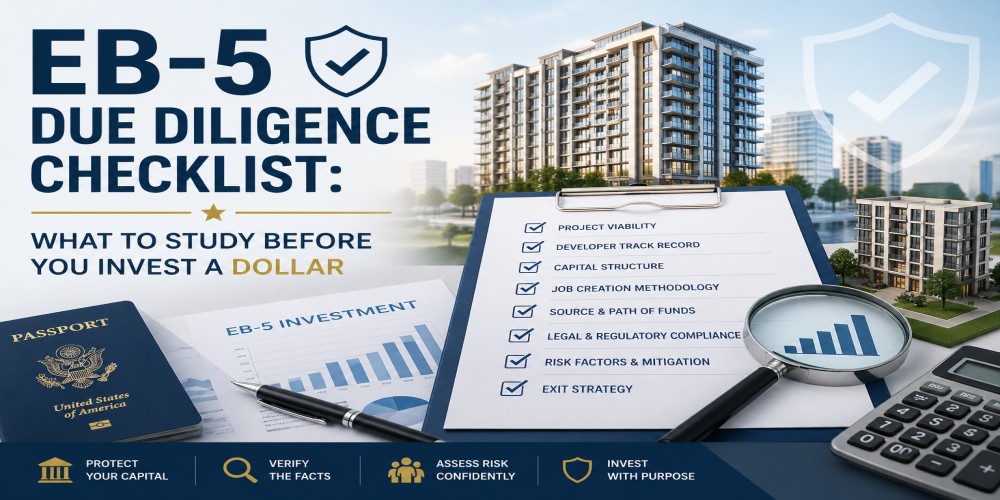
EB-5 Due Diligence Checklist: What to Study Before You Invest a Dollar
This guide explains why EB-5 due diligence is essential before making an investment for a U.S. Green Card. It outlines key areas investors must evaluate, including regional center track records, job creation models, capital structure, source of funds, and exit strategies. The article also highlights common red flags and emphasizes the importance of aligning investment decisions with immigration timelines. By following this checklist, investors can reduce risk, avoid costly mistakes, and make informed EB-5 investment decisions.
How to Evaluate an EB-5 Regional Center: 8 Due Diligence Steps Every Investor Should Follow
This guide explains how investors can evaluate an EB-5 regional center before committing capital. It outlines eight essential due diligence steps, including verifying USCIS designation, reviewing approval track records, assessing job creation methodology, analyzing financial structures, and evaluating developer credibility. By following these steps, investors can reduce both financial and immigration risks while making informed decisions about their EB-5 investment.

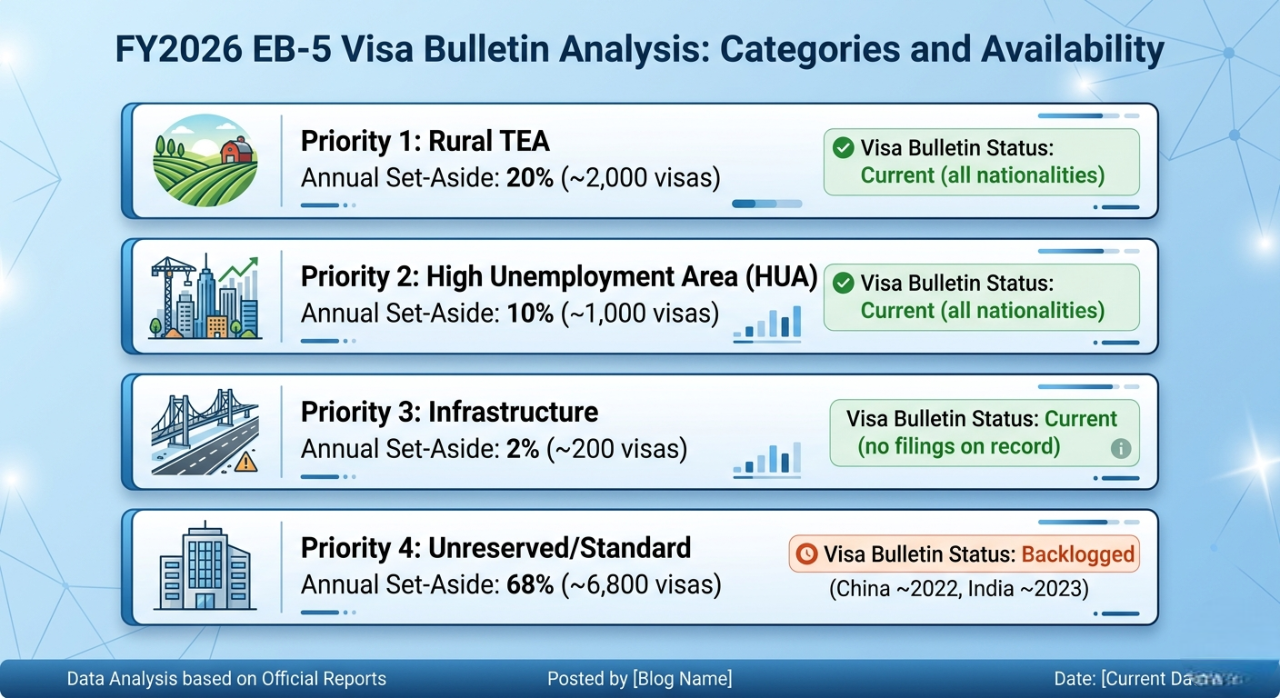
May 2026 EB-5 Visa Bulletin Explained: Set-Aside Visas and Priority Dates for Your Green Card
The article explains the May 2026 EB-5 Visa Bulletin and its importance for investors seeking a U.S. green card through the EB-5 Immigrant Investor Program. It highlights how the Visa Bulletin determines visa availability based on priority dates and country of origin, especially due to annual visa limits. A major focus is on the set-aside visa categories introduced by the EB-5 Reform and Integrity Act of 2022, which allocate visas to rural, high-unemployment, and infrastructure projects. These categories often move faster than the unreserved pool, making them a strategic choice for investors.
12 Key Factors to Evaluate Before Making an EB-5 Investment in the USA
This guide explains the 12 most important factors to consider before making an EB-5 investment, including project selection, job creation, risk assessment, and immigration compliance. It helps investors reduce risks and improve their chances of securing a US Green Card through the EB-5 visa program.
USCIS EB-5 FIFO Model 2026 Explained | New I-526E Processing Rules & Impact
The new USCIS EB-5 Inventory Management Model, effective March 30, 2026, introduces a structured FIFO system that prioritizes visa categories and project readiness over filing date. Investor petitions (I-526E) will now only be processed after I-956F project approval, with rural projects receiving top priority through a dedicated queue. This change significantly impacts processing timelines, making project selection—especially I-956F approval status—a critical factor. With the September 30, 2026 grandfathering deadline approaching, investors and attorneys must act quickly to secure faster processing and program protections.
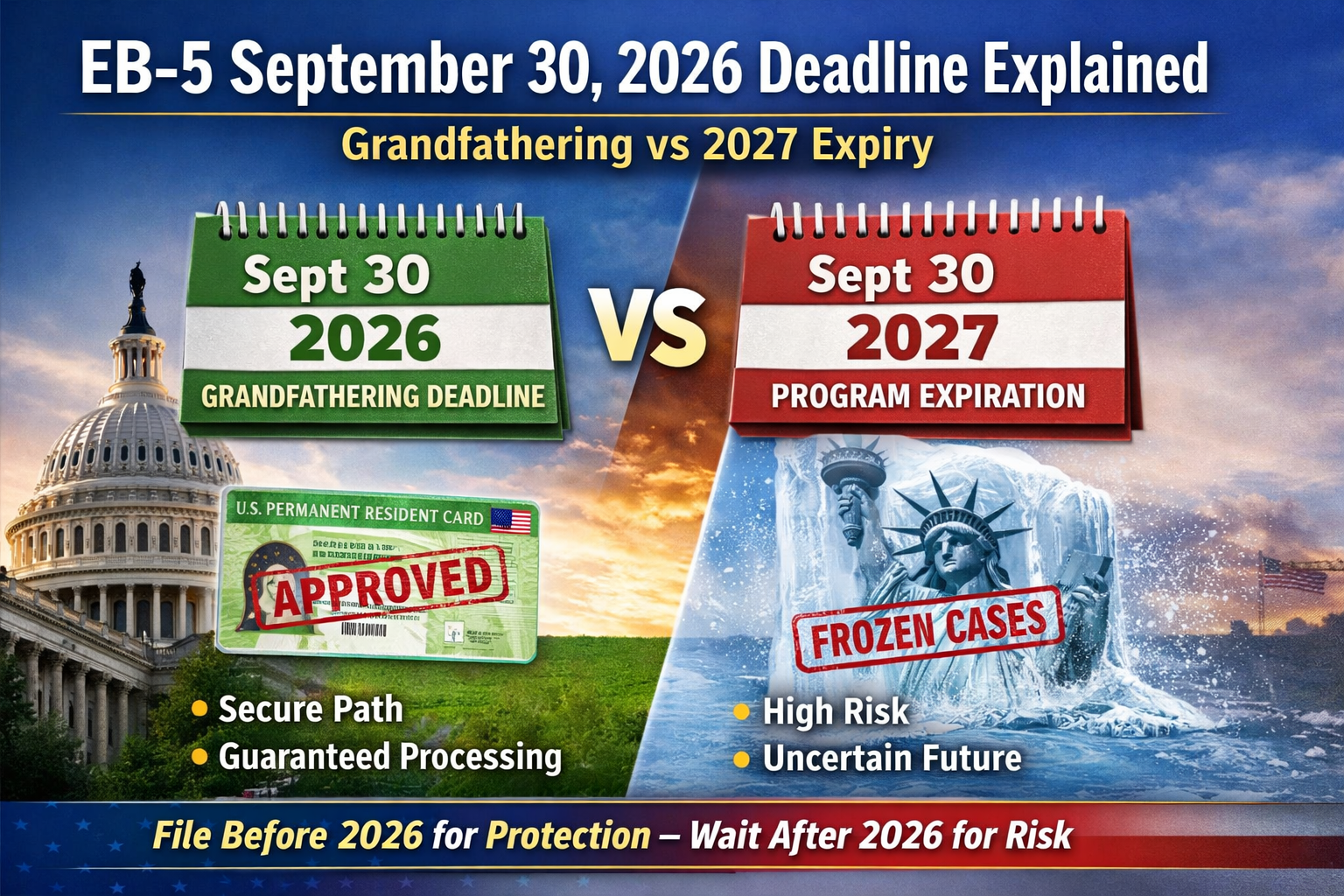
EB-5 September 30, 2026 Deadline Explained: Grandfathering vs 2027 Expiry
This blog explains the critical difference between the September 30, 2026 grandfathering deadline and the September 30, 2027 program expiration in the EB-5 visa program. It highlights how filing before the 2026 deadline ensures full legal protection under the EB-5 Reform and Integrity Act, allowing investors to continue their green card process even if the program expires. In contrast, investors who file after this date face uncertainty, as their applications depend on future Congressional renewal. The blog also covers real risks based on the 2021 program lapse, what grandfathering protects, investor scenarios, and why early preparation is essential for securing a stable EB-5 pathway.
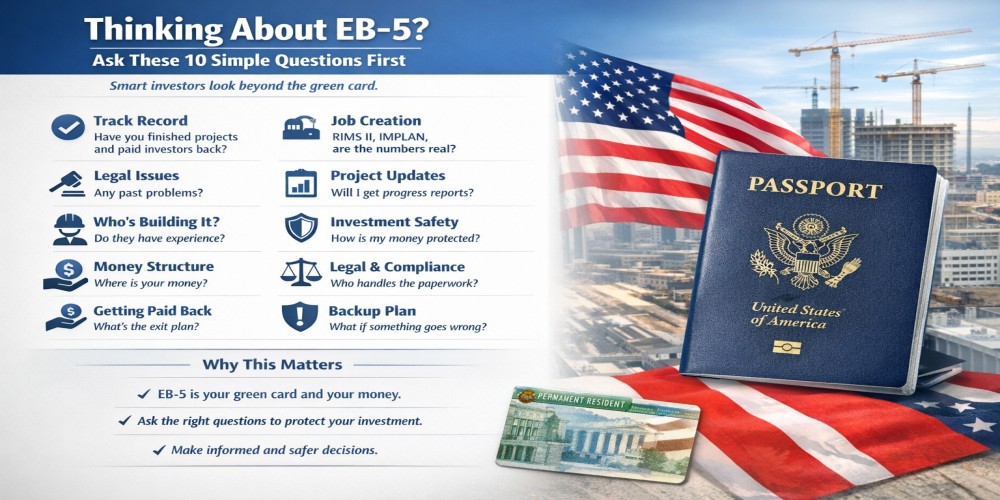
EB-5 Investment Guide: 10 Questions Every Investor Must Ask
This guide explains the importance of evaluating an EB-5 investment beyond just obtaining a green card. It outlines 10 key questions investors should ask about a project's track record, legal history, job creation methods, financial structure, and risk management. By asking the right questions, investors can make informed decisions and reduce potential risks.
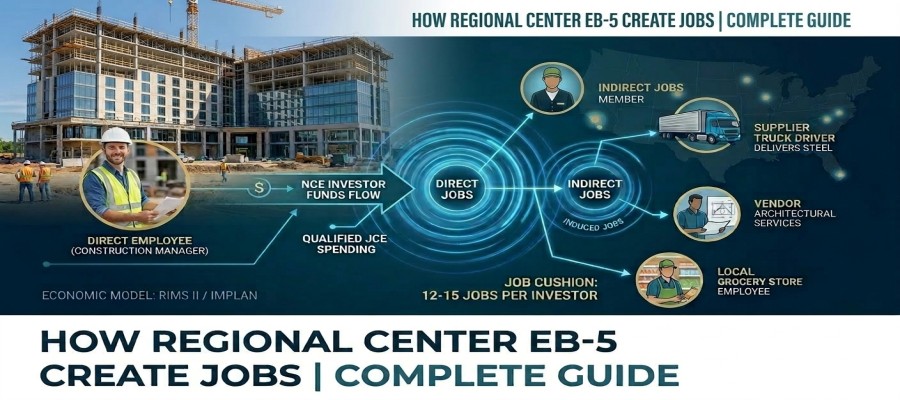
How Regional Center EB-5 Projects Create Jobs | Complete Guide
Regional Center EB-5 projects create jobs through structured investment and economic modeling rather than direct hiring alone. Investor funds flow from the New Commercial Enterprise (NCE) to the Job-Creating Entity (JCE), where they are used for construction, development, and operations. Economists then apply models like RIMS II and IMPLAN to estimate direct, indirect, and induced jobs. Each investor must be credited with at least 10 full-time U.S. jobs, but strong projects typically include a job cushion (12–15 jobs per investor) to reduce risk. Job creation must not only be projected but also proven over time with proper documentation. For investors, the best projects are those with conservative assumptions, clear structure, and strong execution.
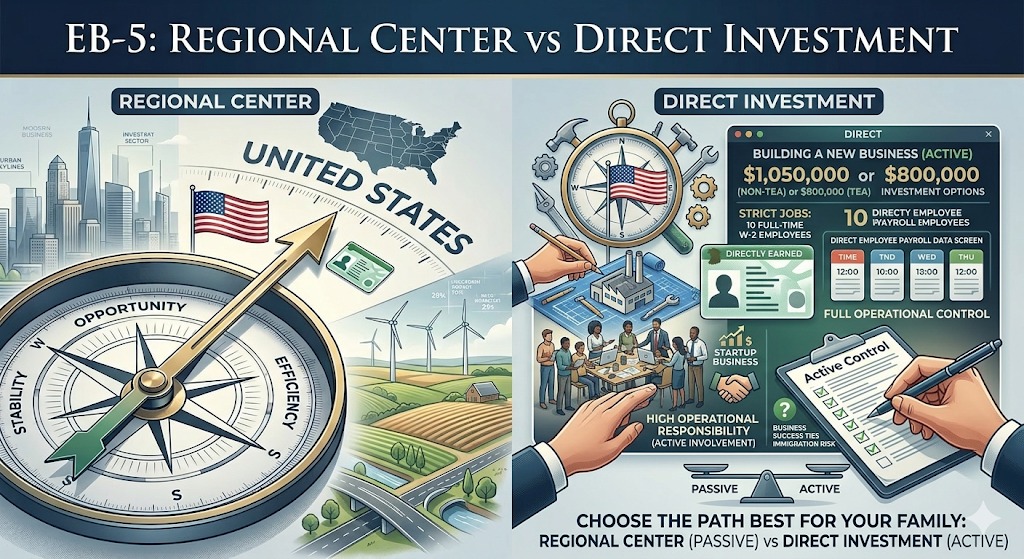
Regional Center vs Direct EB-5: Which Investment Is Best for Your Family?
This blog explains the key differences between regional center EB-5 and direct EB-5 investments. Regional center investments are passive, professionally managed, and offer more flexibility in job creation, making them lower-risk for many investors. Direct EB-5 investments require active involvement, full business control, and strict job creation through direct employees. The right choice depends on factors like risk tolerance, desired control, timeline, and business experience.
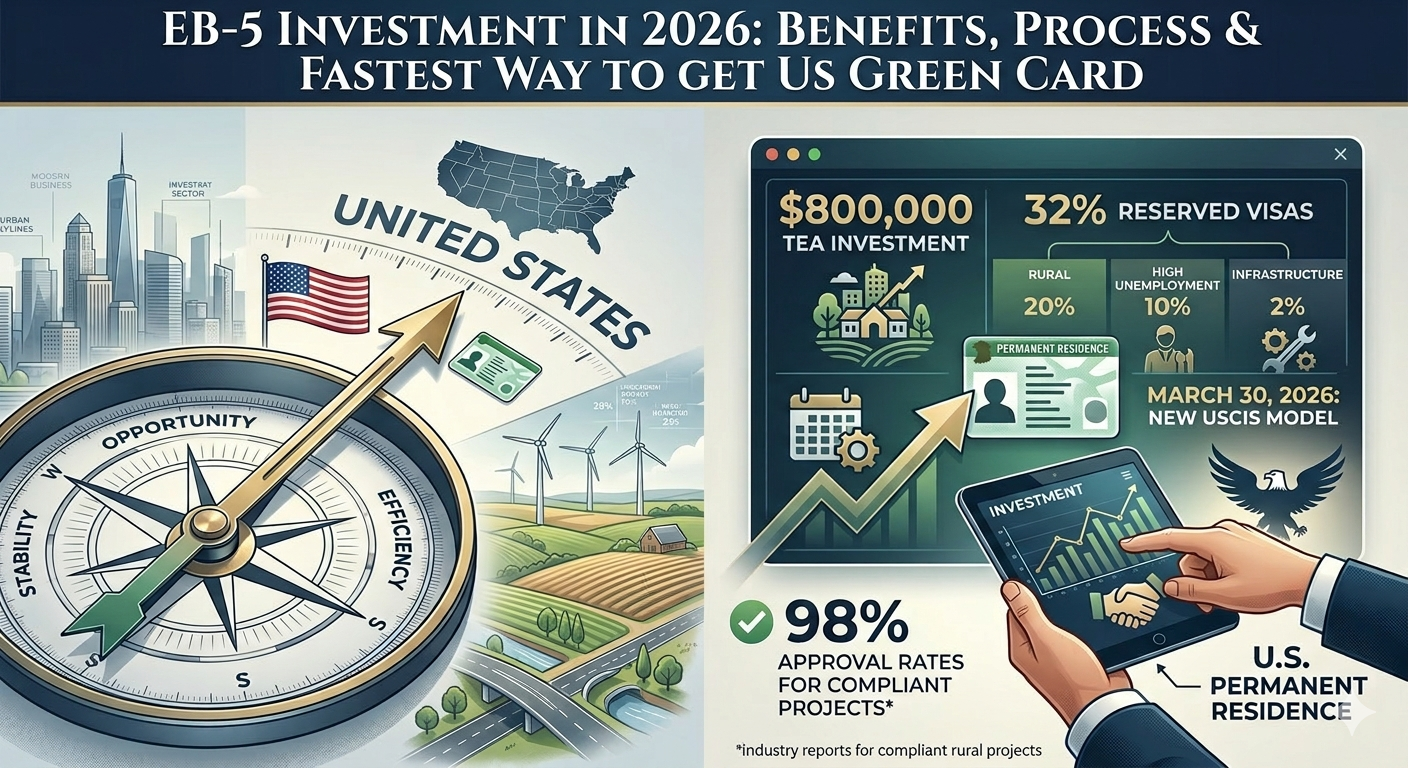
EB-5 Visa 2026: Benefits, Process & Why It’s the Best Time to Invest
The EB-5 Immigrant Investor Program in 2026 offers a strong opportunity for foreign investors to obtain U.S. permanent residency through investment. With stable regulations, reserved visa categories still available, and a new USCIS processing system prioritizing rural projects, investors may benefit from faster approvals and reduced waiting times. The introduction of stricter compliance under the Reform and Integrity Act has improved transparency and investor protection. Overall, 2026 is considered a strategic time to invest, especially in rural or reserved-category projects before demand increases.